
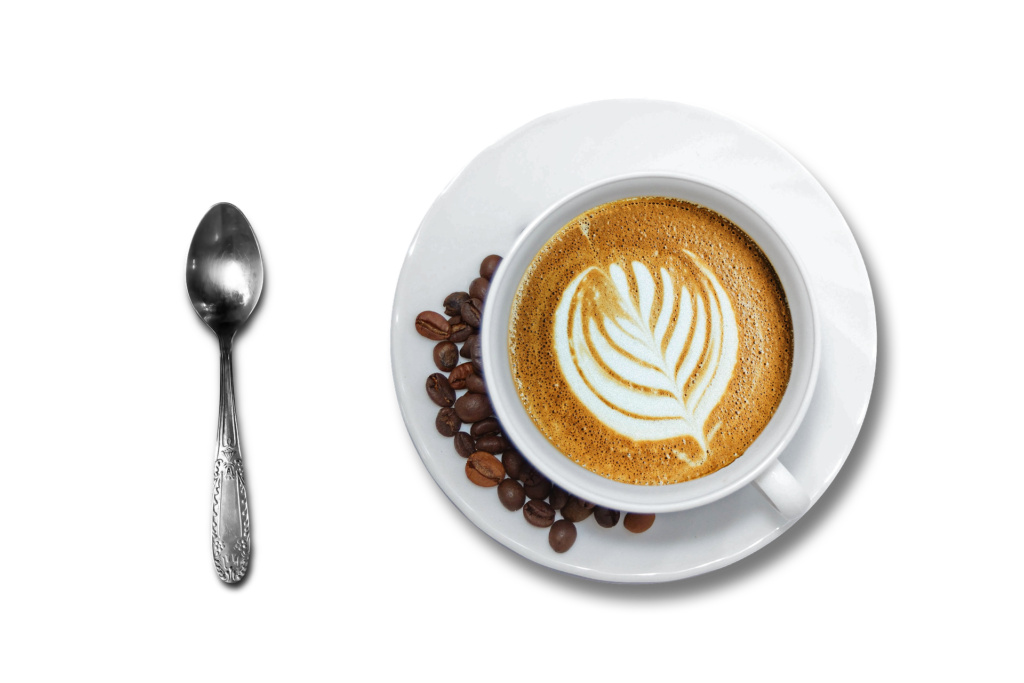
In short, because 64 out of every 100 coffee drinkers choose the Latte as their preferred drink.
Now, why is it such a popular drink? The answer is not so easy but it starts around the late 1800s. In 1864 William Dean Howell, author of Italian Journeys coined the term “Caffe Latte”. For a free copy of William’s travels in “Italian Journeys” to Venice and his Caffe Latte connection click here.
Coming to the surface about six o’clock A.M. I found a daylight as cheerful as need be upon the appointments of the elegant cabin, and upon the good-natured face of the steward when he brought me the caffè latte…
William Dean Howell, author of Italian Journeys
There are however those historians that belief different and this is why:
Since the 1600s Folks have been experiencing the coffee + milk combination. Within the late 1700s, coffee homes in Austria started serving a drink called the Kapuziner, which contained coffee with lotion, sugar, and herbs. This was the start of the classic Italian cappuccino.
THE LEGENDARY LATTE
In Europe, they enjoyed coffee for centuries during breakfasts. If you asked for a latte in any Italian or French cafe they won’t understand you. You will receive a nice cold glass of milk instead. That is because the legendary Latte is American.
The primary cause for the adaption of this term “latte” was because it’s easy shorthand slang for “caffe latte,” AKA coffee and milk. With time, the shorthand term “latte” started to relate to an espresso beverage that mostly includes milk. The rest is history. Nowadays the classic latte is constructed with two pillar ingredients: espresso and steamed milk. The word “latte” comes from the Italian word “caffè e latte” (other variations are “coffee latte” and “cafe latte”), which means “coffee & milk.”
LETS DISSECT THE CLASSIC LATTE
Did you know that the standard combination for a latte is 1/3 espresso, 2/3 steamed milk? It also has a small, thin layer of microfoam on the surface. With this particular proportion, baristas can quickly adjust how big the latte is when you order it, though the traditional size of the latte ranges between 10-12 ounces.
Nonetheless, one great element about lattes is that they are extremely customizable. You can effortlessly embellished them with flavourings such as mocha, caramel, vanilla, or any other syrup. You can even try it with various milk kinds like soy, almond, coconut, or oat. Furthermore, it is possible to change the coffee completely by supplementing tea rather! A few of the popular tea supplements include masala chai, matcha, rooibos, and much more.
WHAT IF YOUR ESPRESSO IS TOO STRONG?
The great thing concerning the latte is that it’s a great espresso drink for folks who don’t want anything overpowering. Though there’s espresso, which can be extremely sturdy and strong, the percentage of milk will greatly dilute the seriousness of the caffeinated drinks within the coffee.
KNOW YOUR COFFEE
The latte is extremely versatile in ingredients, nonetheless, it can also quickly be confused with other common espresso drinks. Below is a list of typical coffee drinks that can easily be confused with the lovable latte.
- CAFÉ AU LAIT – The ancestor of the latte, the café au lait is similar to the makeup products for the latte as far as the pairing of coffee and milk. The primary difference between both of these coffee beverages is coffee coarseness. Since drip coffee uses a higher percentage of water to coffee when brewing, spill coffee does have a decent amount of caffeinated drinks, though it isn’t because serious as the actual quantity of caffeinated drinks in espresso. In terms of makeup products is worried, the café au lait generally features about 1/2 spill coffee to 1/2 steamed milk. Unlike the latte, the café au lait makes use of regular spill coffee as opposed to shots of espresso. In comparison to the café au lait, the latte is composed of about 1/3 espresso and 2/3 milk.
- LATTE MACCHIATO – The cooler cousin associated with a latte and also the macchiato, the latte macchiato is a combination between both of these products. When creating a latte, the espresso is generally poured into the cup very first, as well as the steamed milk is poured in later. Nevertheless, the latte macchiato is the reverse of the process. The milk is steamed up to a velvety microfoam persistence, which can be then poured into a cup. After the milk is poured, then a half-shot of the espresso is gently poured together with it. This creates a layered beverage by having a place of espresso upon it, known as a “macchia.” The primary distinction between the latte, therefore, the latte macchiato could be the order of components, as well as the number of espressos. Due to the small number of espresso, the latte macchiato is significantly weaker in caffeine content compared to the latte.
- CAPPUCCINO – Though both beverages utilize 1-2 shots of espresso, there are numerous differences between both of these drinks, through the volume, to your percentage of components, towards the effectiveness. Espresso with steamed milk topped through a deep layer of fluffy, frothy foam. The cappuccino features even more milk foam compared to the latte does, though both drinks have actually steamed milk in them. The cappuccino is just a smaller beverage, about 6 ounces total with 3 ounces of espresso and 3 ounces of milk. The surplus of milk foam is why numerous coffee fans like the cappuccino. Because of the percentage of the components, the cappuccino is more caffeinated as compared to the latte due to the smaller amount of milk.
MAKING A LATTE
Any professional barista in almost any restaurant has some tips on how to make it. If you have an espresso machine, all you need is some milk to begin brewing. You can view our guide and movie guide here, or review our step-by-step instructions on latte brewing below.
yield: 1 prep time: 5 MINUTES cook time: 5 MINUTES additional time: 10 MINUTES total time: 20 MINUTES
INGREDIENTS
- 7-9 oz of milk of your preference
- 16.5 grams of ground espresso beans
- A 10-12 oz latte cup
INSTRUCTIONS
- Grind 16.5 grams of espresso coffee.
- Extract the espresso with an espresso machine into a 10-12 ounce cup
- Pour 7-9 ounces milk into the milk pitcher. Steam it to 160° F.
- When the brewing is done, pour the steamed milk at an angle about 3-4 inches above the cup
THINK NORMAL LATTES ARE LAME?
Don’t just like the usual latte? The fantastic development is that considering that the latte is really flexible and adaptable, you can personalize ingredients to your preference.
THINK ABOUT TEA?
Not a lover of espresso? Don’t let that stop you! You could brew your latte with a tea of your choice! Instead of making use of espresso, it is possible to supplement a beverage of your choice. All you have to do is steep the same level of tea to adequately supplement the espresso and then pour in your steamed milk. Voila! A big favourite of this is Rooibos tea from South Africa. Its called a “Red Latte” when prepared as a traditional Latte with Red Espresso.
ICE COFFEE or ICED LATTE?
Want anything to cool you straight down for a hot summer morning? Go for an iced latte rather! Making an iced latte is comparable to the process of coming up with a hot latte. You’ll, however, draw out your espresso (or tea) as always, but alternatively of steaming your milk, you’ll pour in cool milk into the latte instead. Also ensure that it stays cool, what you need to do is plop several ice cubes in your glass so you can sip on your iced latte for extended! There is some confusion here also. There is also the very popular Iced Coffee that’s more like a thick and creamy milkshake traditionally. We will discuss this more in our next article.
Now go make some Lattes…